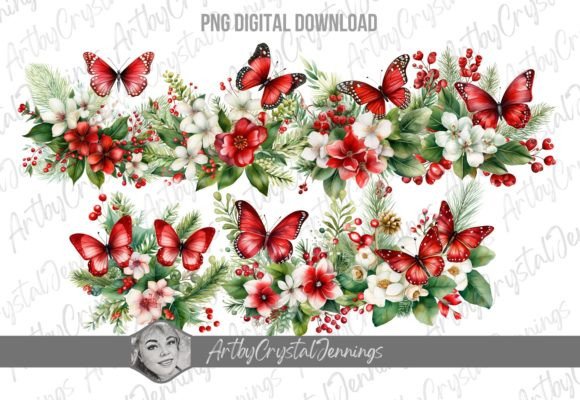
Reviewing Watercolor Floral Christmas Butterflies for Stitching
As a designer who spends half my life staring at digitized files and the other half pulling bobbins out of tangled messes, I have learned to be skeptical of holiday designs. The market is flooded with generic snowflakes and rigid reindeer that look stiff once they hit the fabric. So, when I pulled up Watercolor Floral Christmas Butterflies in my design software, my first reaction was cautious curiosity. This isn’t just another clip-art conversion; it belongs to the Illustrations category, which usually implies a softer, more artistic approach to digitizing. I needed to know if this aesthetic could survive the transition from screen to needle without losing its charm.
The First Impression: Softness Meets Structure
The immediate mood of this design is whimsical yet refined. Unlike traditional holiday motifs that rely on hard edges and high-contrast blocks, this piece uses fluid lines to mimic the bleed of watercolor paint. For an embroidery project, this presents both a challenge and an opportunity. The visual personality suggests elegance rather than kitsch. It feels appropriate for a boutique brand or a maker who wants to elevate their holiday collection beyond the standard red-and-green tropes.
I looked closely at the layout. The butterflies are not merely sitting on top of the florals; they seem integrated into the composition. This is crucial for stitching clarity. If the elements are too disjointed, the final product can look like a sticker slapped on a shirt. Here, the flow suggests a natural movement. However, because it mimics a watercolor style, I immediately checked for potential issues with stitch density. Watercolor effects often require subtle shading, which in embroidery translates to varied thread colors and careful layering of fill stitches.
Real-World Application: The Holiday Tote Test
To truly evaluate Watercolor Floral Christmas Butterflies, I imagined it on a specific product: a heavy canvas tote bag intended for holiday gift-giving. This is a common request for small shop products and Etsy sellers during the fourth quarter. On a textured fabric like canvas, the design needs enough substance to stand out but not so much density that it puckers the material.
I envision this working beautifully as a central focal point on a neutral-colored bag. The floral elements would provide a solid base, while the butterflies add a delicate touch. For a craft business, this versatility is key. It’s not just a Christmas design; it’s a winter design. By swapping red threads for icy blues or silvers, the same file could serve as a general winter decoration, extending its commercial viability beyond December 25th. This adaptability increases the value of the digital embroidery file for any creative entrepreneur looking to maximize their design assets.
Apparel and Custom Gifts
Moving beyond totes, I considered custom apparel. A sweatshirt embroidery project requires different handling than a tote. The fleece surface is plush and can swallow fine details. In this case, the larger floral components of the design would hold up well, providing a nice texture against the soft fabric. However, the finer wings of the butterflies might get lost if the stitch count is too low or the thread thickness is too heavy.
For baby embroidery, such as a holiday onesie or a nursery blanket, the softness of the watercolor theme is a major selling point. Parents often shy away from loud, aggressive graphics for infants. This design offers a gentle, dreamy aesthetic. Yet, I would advise testing the stitch density rigorously. Babies have sensitive skin, and a dense block of satin stitch or fill stitch can feel scratchy or stiff against the back of a neck. Using a soft stabilizer and perhaps reducing the density slightly could make the finished product more comfortable and premium.
Technical Considerations for the Embroiderer
While the artistic merit is high, the practical execution demands attention. When working with a design that mimics Illustrations, the transition between thread colors is critical. In watercolor painting, colors blend seamlessly. In machine embroidery, we rely on the eye to blend adjacent thread colors. I recommend selecting thread colors with gradual tonal shifts. Jumping from a dark green to a light mint without intermediate shades will break the illusion of the watercolor effect.
Fabric choice plays a massive role here. On thin fabric, such as a silk scarf or a lightweight tea towel, the stitch density must be managed carefully. Too many stitches will cause puckering, ruining the elegant drape of the material. Conversely, on textured fabrics like terry cloth towels, the design needs to be large enough so the texture doesn’t obscure the details. I always suggest running a test on scrap fabric first. Check how the stabilizer interacts with the material. A cut-away stabilizer might be necessary for stretchy fabrics like t-shirts to prevent distortion over time.
Dark fabrics present another hurdle. If you plan to stitch this on a navy or black garment, you cannot rely on the background fabric to show through. The design must be fully stitched with opaque threads. This might require adding an underlay or adjusting the sequence of stitches to ensure full coverage. Always test your thread color contrast on the actual fabric you intend to use. What looks vibrant on a white screen can look muddy on dark cotton.
Commercial Viability and Brand Consistency
For Etsy sellers and handmade shop owners, the perceived value of a product is tied to its presentation. Watercolor Floral Christmas Butterflies lends itself well to high-end branding. It doesn’t look mass-produced; it looks curated. This helps build customer trust. When a buyer sees a personalized gift with this level of artistic detail, they perceive higher quality. It enhances the giftability of the item.
However, consistency is key. If your brand is known for bold, geometric modernism, this soft, organic design might feel out of place. But if your niche is romantic, vintage, or bohemian styles, this design fits perfectly. It works well for printable mockups too, allowing you to showcase the design on various products before you even stitch a single thread. This saves time and materials during the product development phase.
Practical Designer Notes
- Check the License: Before selling finished items or using this in commercial embroidery projects, confirm the licensing terms. Some designers allow unlimited sales, while others have caps.
- Hoop Size Matters: Ensure the design fits your hoop size without needing excessive resizing, which can distort stitch angles.
- Stabilizer Selection: Use a stabilizer that matches the fabric weight. Lightweight fabrics need support to handle the tension of the embroidery file.
- Thread Quality: High-sheen rayon or polyester threads work best to mimic the luminous quality of watercolor paints.
- Test Stitch: Always run a test stitch on similar fabric to check for registration issues between color stops.
In conclusion, Watercolor Floral Christmas Butterflies is a strong contender for holiday collections that aim for sophistication over tradition. It requires a thoughtful approach to thread selection and fabric preparation, but the payoff is a unique, artistic finished product. For the experienced designer, it offers a refreshing break from the standard holiday fare, provided you respect the technical nuances of translating a soft illustration into durable stitches.